Planning your dream home? Knowing who does what can save you time, money and stress. But when you’re new to the world of custom homes, the lines between architect and builder can blur fast.
At Begbie Bentham Design & Construct, we’ve worked on enough high-end builds to know that the smoother the collaboration, the better the outcome. In this guide, you’ll learn the main difference: architect vs builder, where their responsibilities overlap, and how to keep everyone on the same page from day one.
Let’s begin.
What Does an Architect Do?
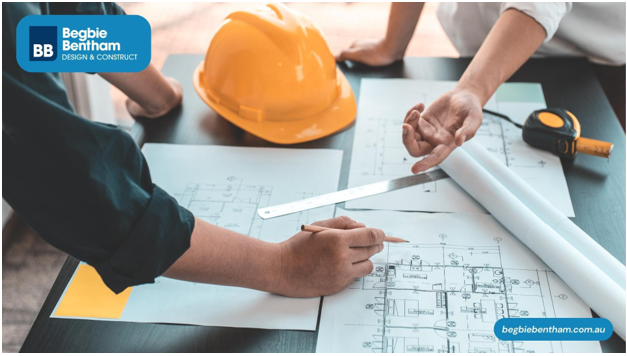
An architect lays the creative and structural groundwork for your home. They turn your ideas into detailed, buildable plans that follow council rules.
Here’s what an architect typically handles:
- Concept design: Sketching layouts that match your lifestyle, block shape, and wishlist.
- Site-specific solutions: Designing for tricky slopes, heritage overlays, or tight lots.
- 3D visualisations: Helping you picture how the finished home will look and feel.
- Council approvals: Navigating local regulations to get plans approved smoothly.
- Design vs build focus: Architects lead the design phase, making sure every detail suits both your vision and legal needs.
For example, an architect working on a steep block might reconfigure the layout to minimise retaining walls and create a split-level flow that works naturally with the land.
Next, we’ll explore what the builder brings to the table.
What’s the Builder’s Job?
A builder takes the architect’s plans and brings them to life. They manage the day-to-day progress, people, and materials on-site.
Builders are the on-the-ground leaders. They handle everything from scheduling trades and ordering materials to coordinating site access and keeping the build on track. Their job is to deliver the finished home safely, efficiently, and according to the plan.
In a luxury home team, a builder’s input can shape the success of the entire project. Picture a narrow waterfront block. The builder must plan crane access, material drop-offs, and manage construction around tight boundaries without disturbing neighbouring properties.
A skilled builder looks for practical solutions that improve cost efficiency while protecting build quality.
Where the Roles Overlap
Architects and builders have different jobs, but they often meet in the middle. These overlaps affect how smoothly a custom home project runs.
Here’s where overlap often occurs:
- Site planning: Both may suggest the best home position based on sun, slope, and views.
- Structural options: Builders might flag cost or feasibility issues with certain architectural choices.
- Resolving on-site issues: Unexpected site conditions often require joint problem-solving.
- Design vs build alignment: Decisions made on paper must be practical to build, and that requires input from both.
- Project timing: Coordinating schedules early avoids costly delays or redesigns.
From our experience, the best outcomes happen if the architect and builder work together from the very start.
The Power of a Collaborative Luxury Home Team
When architects and builders function as one team, the entire custom build becomes smoother, faster and far less stressful for everyone involved.
What Collaboration Looks Like
A well-functioning luxury home team stays connected from the very first sketch to the final walkthrough. That means regular site meetings to catch issues early, shared project management tools to keep track of changes, and open, honest communication across every channel.
Modern Methods Make It Easier
Design-build firms combine both architect and builder under one roof. This model allows for stronger coordination, quicker decision-making and a unified vision throughout the project. Since both design and construction happen within the same team, there’s less risk of miscommunication or missed details along the way.
Design-Build vs Separate Teams
Design-build offers faster turnaround, tighter cost control and fewer surprises on-site. The whole team works from the same playbook. Contrarily, traditional setups give homeowners more freedom to hand-pick individual professionals, which can work well if communication stays strong.
At BBDC, we’re firm believers in clear, early collaboration. It’s how we help deliver the best possible outcome every time.
Case Study
Even the best plans can go off track when the architect vs builder relationship lacks clear, ongoing communication.
The setup: An architect designed a striking high window feature to maximise natural light and create a bold visual statement. The builder, following standard procedure, installed a regular lintel suited for typical window heights.
What went wrong: There was no direct discussion about this detail. The drawing notes weren’t flagged clearly, and the site team proceeded without questioning the spec.
The fix: A joint site meeting led to redrawing the plans and rebuilding the window section. It caused extra delays and increased the cost.
Lessons learned: Always ensure there is a shared understanding of design details before construction starts or changes are made on site. It is a simple step that avoids expensive surprises later.
Tips to Get the Best From Both
Working with an architect and builder on a custom home takes teamwork. Here are a few practical ways to keep things running smoothly.
- Be strategic: Bring your architect and builder on board early in the planning stage. This avoids delays and keeps your design vs build decisions realistic.
- Ask questions: Do not assume they are always aligned. Check in regularly and clarify details yourself.
- Use collaboration tools: Platforms like Buildertrend or CoConstruct help everyone stay updated in real time.
- Create a checklist: List key decisions, approvals and design details so nothing slips through the cracks during your project.
Ready to Build with Confidence?
Building a custom home is exciting, but it comes with big decisions, especially around who does what. Now you know the core differences in the architect vs builder roles, where their responsibilities meet, and why collaboration matters more than ever.
You’ve seen how poor communication can slow things down, and how the right team setup can keep everything moving smoothly.
At BBDC, we combine design expertise with hands-on building experience to make that process easier for you. Whether you’re just starting out or already have plans in hand, we’re here to guide you from concept to keys.
Let’s build something great together. Reach out today.