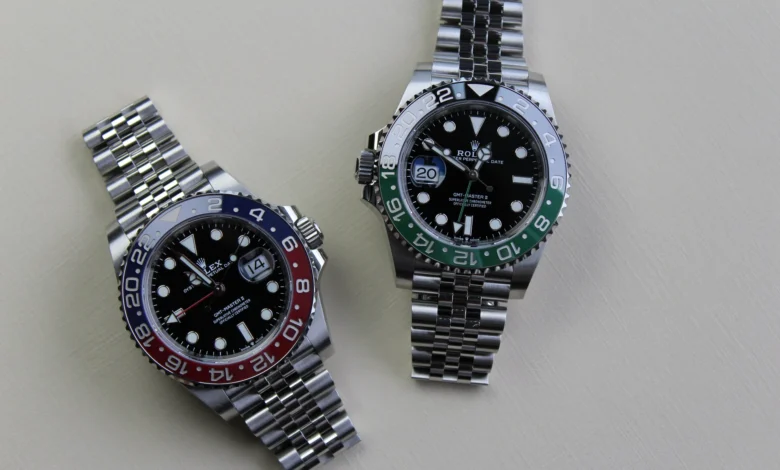
The secondhand Rolex market is a minefield right now.
Walk into any pawn shop or scroll through Facebook Marketplace, and you’ll see dozens of “pre-owned” Rolex listings. Some are genuine. Some are obvious fakes. And some are super clones that will fool 90% of the people who handle them.
The problem? Most of the old advice for spotting a fake doesn’t work anymore. The cheap Canal Street specials with ticking second hands are still out there. But the real danger is the $500 watch that looks, feels, and even sounds like the real thing.
Here’s what actually separates a genuine Rolex from a high-end replica in 2026.
Why Old “Spot the Fake” Advice Is Outdated
Ten years ago, spotting a fake Rolex was easy. The weight felt wrong. The second hand ticked instead of sweeping. The cyclops didn’t magnify properly. The bracelet rattled.
Those tells are useless now.
The top-tier super clones use 904L steel—the same alloy Rolex uses. They weigh the same. The movements beat at 28,800 bph, just like genuine Rolex. The second hand sweeps smoothly. The cyclops magnifies at 2.5x. The bracelet has solid end links and the right clasp feel.
The factories that produce these watches have been reverse-engineering Rolex for years. They’ve studied the details that used to separate real from fake. And they’ve replicated them.
That doesn’t mean there are no tells. It means the tells have moved to things you need magnification, UV light, or a trained eye to spot.
The Weight and Sweep Test (And Its Limits)
The weight test still catches the cheap stuff. A genuine Submariner weighs about 155 grams with a full bracelet. The bottom-tier fakes weigh 50-70 grams less. You can feel the difference immediately.
But the super clones weigh the same. They use 904L steel. The weight distribution is right. If you’re handling one without a reference, you won’t notice anything off.
The sweep test follows the same pattern. Cheap fakes use quartz movements or low-beat automatics (21,600 bph). The second hand stutters. Genuine Rolex movements beat at 28,800 bph—eight ticks per second—so the hand appears to glide.
Super clones also beat at 28,800 bph. The VS3235 movement in a VSF Submariner sweeps exactly the same way a genuine Rolex does. To the naked eye, there’s no difference.
Movement and Caseback Checks
Here’s where the tells get interesting.
Genuine Rolex watches have solid casebacks. You can’t see the movement. That’s actually an advantage for the replica factories—they don’t have to make the movement look pretty.
But some replica factories have started using display casebacks on models where the genuine version doesn’t have one. That’s an instant tell. If you see a Submariner with a clear caseback, it’s fake.
For the Daytona, the real watch has a solid caseback. The super clones from VSF and Clean Factory also have solid casebacks. You can’t see the movement at all.
The movement finishing itself is a tell, but you need a watchmaker to open the caseback to see it. The genuine Rolex movements have Geneva stripes, perlage, and gold-plated rotors. The clone movements (VS3235, DD4130) have some finishing, but it’s not at the same level. The rotor might be gold-colored instead of actual 18k gold. The bridges won’t have the same anglage.
The rehaut is another area. Genuine Rolex has a laser-etched crown at 6 o’clock that’s nearly invisible without magnification. The laser etching on the super clones is often too deep or too visible. Under a loupe, the difference is clear.
Where Even Careful Buyers Get Fooled
The most dangerous thing about super clones isn’t the watch itself. It’s the packaging.
Sellers have gotten good at replicating the boxes, the papers, the warranty cards, and even the hang tags. A buyer sees a complete set and assumes it’s legitimate. The papers and card might have matching serial numbers—numbers that are in the genuine database, because the factory copied them from a real watch.
The serial number itself can be a tell. Genuine Rolex uses a specific engraving process. The super clones can’t quite match the depth and crispness. But you need good lighting and magnification to see it.
The laser-etched crown at 6 o’clock is another one. On genuine Rolex, it’s barely visible. On a super clone, it might be too prominent, or the microtext in the crown isn’t quite right. Again, you need a loupe.
Lume is a common tell. Rolex uses a specific lume compound with a particular color and consistency. Under UV light, the lume color and charge time are different. The super clones have gotten better at matching the lume, but it’s still not identical.
Water resistance is the biggest practical difference. Genuine Rolex watches are pressure-tested to 100m, 300m, or more. The gaskets and seals are verified. Super clones aren’t tested the same way. They might survive a splash, but they’re not dive watches. Take one swimming, and you’re taking a risk.
What to Do If You’re Not Sure About a Secondhand Watch
If you’re buying a Rolex on the secondhand market, the safest approach is simple: buy the seller first.
Ask for the watch to be opened. Check the movement. Get a loupe and examine the rehaut, the cyclops, the date wheel font, and the laser-etched crown. Don’t just look at the watch—feel the bracelet action, the bezel rotation, the crown threading.
Any seller who won’t let you inspect the watch properly is a red flag.
It’s worth understanding the landscape of super clone production. Some specialized FAKE ROLEX dealers in the community offer transparency about movements, factory sources, and reference details—and those same standards can help you understand what to look for if you’re buying genuine. The same factories that make super clones (VSF, Clean before they closed) have set the bar so high that the difference between their products and genuine is now measured in millimeters and magnification. That’s the reality of the market today.
Here’s the honest truth: a super clone rolex can fool most people. It can fool some watchmakers. It can fool you if you’re not careful.
The only way to be certain is to have the watch authenticated by someone who knows what they’re doing. Rolex service centers will authenticate. Independent watchmakers who work on Rolex will authenticate. The forums and communities will authenticate from photos, though that’s not foolproof.
Don’t trust the papers. Don’t trust the box. Don’t trust the story.
Trust the movement, the caseback, the rehaut, and the cyclops. If those check out, you’re probably safe. If something feels off, it probably is.