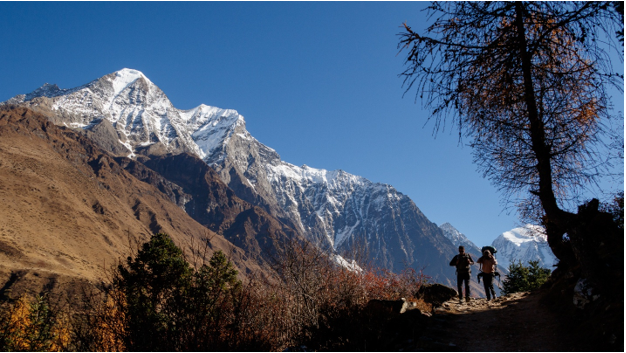
There’s something incredibly special about the Himalayas. We really can’t even explain it, but you can feel it in the very air you breathe – the majestic mountains, always there; the colourful prayer flags fluttering in the wind, quiet monasteries, deep, peaceful forests, and empty forest trails.
Most people think of well-known treks, such as the Everest Base Camp Trek and the Annapurna Circuit. However, there is another route that is less crowded, more untouched and offers a more diverse experience. It is the Manaslu Circuit Trek.
Manaslu vs. Other Himalayan Treks
When most people think of trekking in Nepal, they probably think of the Everest Base Camp Trek or the Annapurna Base Camp Trek.
These routes are world-renowned for a reason. They offer breathtaking views, are well-marked, have well-established trails, and have numerous teahouses available. But they also have hundreds of trekkers walking their busy trails, especially during peak season.
Unlike the Mardi Himal Trek, which is shorter than Manaslu and only good if you are limited on time. On the other hand, Manaslu is a longer trek, typically 14-17 days, but the duration can vary. Meaning you cover much more of Nepal on one trek, exploring cultures and landscapes from lowland, warm forests to snowy mountain passes.
You will walk through villages where not much has changed in 50 years and experience both Hindu and Tibetan Buddhist cultures.
If you want a trekking experience away from larger crowds, which still has spectacular views and is thrilling. Manaslu has a perfect mix of challenge, beauty, and authenticity.
The Manaslu Circuit Trek itinerary, designed by Mission Himalaya Trek, provides each trekker with enough time to explore the rich culture and Himalayan trekking experience away from the crowds and modernization.
A Trek Through Layers of Landscape
The Manaslu trek begins deep in the subtropical hills of central Nepal. You will begin the journey in thick forests filled with life: bamboo, oaks, rhododendrons, and tall sal trees.
The trail could get narrow in places and very shaded, winding alongside waterfalls and terraced villages. For spring trekkers, the region welcomes them with a variety of rhododendron hues: flaming red, hot pink, and crisp white.
You’ll be awed, transitioning from green jungles to snow-covered mountains within just a few days. As you climb higher, the air gets cooler. The trees grow shorter, and pine begins to show up more than broadleaf trees.
The route includes several river crossings on a suspension bridge and icy streams originating from melting glaciers in the mountains. By the time you reach Samagaun, the landscape changes again into a high desert of rock, wind, and ice.
The highest point of the journey is Larkya La Pass (5,106 meters), which is a test of strength. However, all the challenges are awarded with towering peaks like Manaslu, Himalchuli, and Cheo Himal, and in the distance, you may get a few glimpses of Annapurna II.
Cultures of the Hills and Highlands
One of the most beautiful things about the Manaslu region is its cultural diversity. In the lower regions, you’ll encounter Gurung and Magar communities. Their houses sit among rice paddies and millet fields, and you’ll often be greeted with a warm “Namaste” and cheerful curiosity.
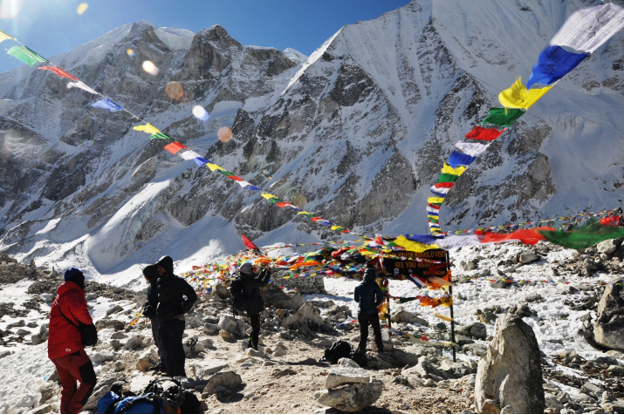
With the higher elevation comes a completely different cultural zone. You will see Tibetan-influenced villages, stone houses, prayer flags, mani walls, prayer wheels spinning steadily, and stupas at every turn.
In places such as Lho, Samagaun, and Samdo, a spiritual significance exists. Monasteries here are colourful. Young monks study Buddhist philosophy, while old monks chant mantras in candle-lit prayer rooms. Life here occurs at a different pace, connected to nature, the seasons, and people’s faith; everything matters.
As a traveller, not only will you see this culture, but you will live it. You will relish bowls of thukpa and Tsampa, drink salty butter tea, and sit right beside locals while a herd of yaks slowly walks the path through the village.
Feathered Friends and Four-Legged Locals
With fewer trekkers and pristine high-altitude terrains, the Manaslu Conservation Area is a Shangrila.
For bird enthusiasts, they might be able to have a few sightings of the Himalayan Monal, the national bird of Nepal, blood pheasants, snow pigeons, and many more.
You might also see a Lammergeier (bearded vulture) or an eagle flying across majestic peaks across the valley. There are also blue sheep, Himalayan Tahrs, and marmots that you can spot.

While it would be remarkable to see red pandas or to see a mythical snow leopard, these animals also roam around higher up in the quiet areas. The likelihood of sharing a path with red pandas or snow leopards doesn’t seem like a reality, but the knowledge that they could be sharing the same area makes the trek feel much wilder and more magical.
So, what makes Manaslu a true microcosm of the Himalayas?
The Manaslu Himal Trek is more than a hike; it is Nepal in its purest, most beautiful form – real, raw, and unforgettable.
One day, you’re walking through a rhododendron forest, and the next, you are crossing a frozen pass with numb fingers and a hopeful heart. In just two weeks, you travel through subtropical rainforests, alpine forests, Tibetan-influenced villages, and snowy passes.
You see diverse ethnic groups, each with their distinct architecture, clothes, language, and heritage. You see rare wildlife, follow ancient trade routes, and sleep under a clear enough sky to count all the stars.
And perhaps most importantly, you get to experience solitude. The Manaslu Circuit Trek has not yet been overrun by mass tourism. You will be sharing trails with more mules than humans, and there are some teahouses where you may be the only guest.
That rare quiet lets you connect more deeply with nature, with local people, and, most importantly, with yourself.
If you want to see everything Nepal has to offer in one shot — from biodiversity to cultural richness, from vibrant valleys to dry, barren ridges —this is your trail.