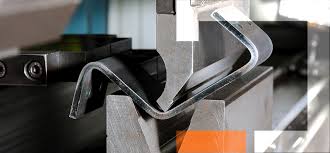
In modern metal fabrication, press brakes are indispensable. They transform flat sheets of metal into precise angles and complex shapes, enabling industries like automotive, aerospace, construction, and manufacturing to function efficiently. For newcomers in this field, one of the first questions that often arises is: what is a press brake? Simply put, a press brake is a machine tool that uses a punch and die system to bend sheet and plate material into specific forms. From small brackets to large structural panels, the press brake is the backbone of accurate, repeatable metal shaping.
But not all press brakes are built the same. Over the years, engineers have developed different types of press brakes, each with unique operating principles, benefits, and limitations. Understanding these distinctions is essential for manufacturers and fabricators who want to choose the right machine for their workflow.
Mechanical Press Brake:
The mechanical press brake is one of the earliest designs. It operates with a flywheel powered by an electric motor, transferring force to the ram through a clutch mechanism.
Mechanical models are known for their high speed and durability. They excel in repetitive bending tasks where precision requirements are not extremely demanding. However, they lack flexibility in stroke length and carry certain safety risks due to the clutch system. While these machines are not as common today, many workshops still rely on them for simple, high-speed operations.
Hydraulic Press Brake:
The hydraulic press brake marked a major leap forward in both safety and performance. Using hydraulic cylinders filled with oil, it applies force to the ram with far more control and consistency than mechanical models.
One of its strongest advantages is flexibility. Operators can adjust both stroke length and tonnage, allowing the same machine to handle delicate bends as well as heavy-duty applications. Overload protection is built-in, which enhances safety. The trade-off is slower operation compared to mechanical presses and a need for regular hydraulic system maintenance. Despite this, hydraulic press brakes remain the most widely used type due to their reliability and versatility.
Pneumatic Press Brake:
Pneumatic press brakes use compressed air to move the ram instead of hydraulic oil. They are lighter-duty machines but offer impressive speed for specific applications.
Because they lack the power of hydraulic or mechanical versions, they are best suited for light sheet metal bending. Their advantages lie in quick cycle times and cleaner operation. However, their limited tonnage capacity makes them unsuitable for thicker or harder metals. Pneumatic press brakes are often chosen by smaller workshops that prioritize speed and simplicity over raw force.
Servo-Electric Press Brake:
The servo-electric press brake represents a newer generation of eco-friendly and highly precise machines. Instead of hydraulics, it uses a servo motor connected to a belt-and-pulley system to power the ram.
This design reduces energy consumption, requires less maintenance, and operates quietly—qualities that are increasingly important in modern, sustainable manufacturing. Servo-electric presses are exceptionally precise, making them popular in industries like electronics and aerospace where accuracy is critical. However, they cannot match the tonnage capacity of hydraulic machines, and their initial cost is higher. For companies prioritizing sustainability and precision over brute strength, servo-electric options are an excellent investment.
CNC Hydraulic Press Brake:
At the center of today’s advanced manufacturing processes is the CNC Hydraulic Press Brake. This machine combines the raw power of hydraulics with the accuracy of computer numerical control (CNC).
Unlike manual or semi-automatic machines, CNC press brakes allow operators to program precise bend sequences, angles, and positions. The machine then executes these instructions consistently, minimizing human error. Features like automated backgauge systems and real-time monitoring further enhance productivity.
The CNC hydraulic press brake is invaluable in industries that require complex, multi-step bending operations, such as automotive body panels, aircraft structures, and architectural components. Although more expensive and requiring skilled operators, it delivers unmatched efficiency and accuracy in large-scale production.
Choosing the Right Press Brake:
The ideal press brake depends on the project at hand:
- For repetitive high-speed bending, mechanical models still serve well.
- For versatile heavy-duty tasks, hydraulic presses are the standard choice.
- For light, fast operations, pneumatic machines provide efficiency.
- For precision and eco-friendly requirements, servo-electric presses excel.
- For advanced automation and accuracy at scale, CNC hydraulic presses are unmatched.
By aligning machine capabilities with production requirements, manufacturers can maximize output while controlling costs.
The Future of Press Brakes:
Press brakes are evolving in response to the demands of Industry 4.0. Modern systems integrate with CAD/CAM software, allowing direct transfer of digital designs to the machine. Laser measuring systems and AI-driven controls are becoming more common, ensuring real-time accuracy and reducing waste.
Sustainability is also shaping the industry. Energy-efficient models, particularly servo-electric and hybrid machines, are gaining traction as manufacturers seek greener solutions without sacrificing performance. The future promises smarter, cleaner, and even more precise bending technology.
Final Thoughts:
From the early days of mechanical presses to the cutting-edge capabilities of CNC-driven machines, press brakes have continually advanced to meet the needs of modern industry. Each type has its place, offering unique advantages that suit specific applications.
By understanding these differences, businesses can make informed decisions when investing in equipment. More than just a technical distinction, the right choice of press brake can provide a competitive edge in terms of efficiency, accuracy, and long-term cost savings. And with reliable resources like miharmle-cnc.com, fabricators have access to the insights and machines needed to stay ahead in a rapidly evolving world of manufacturing.