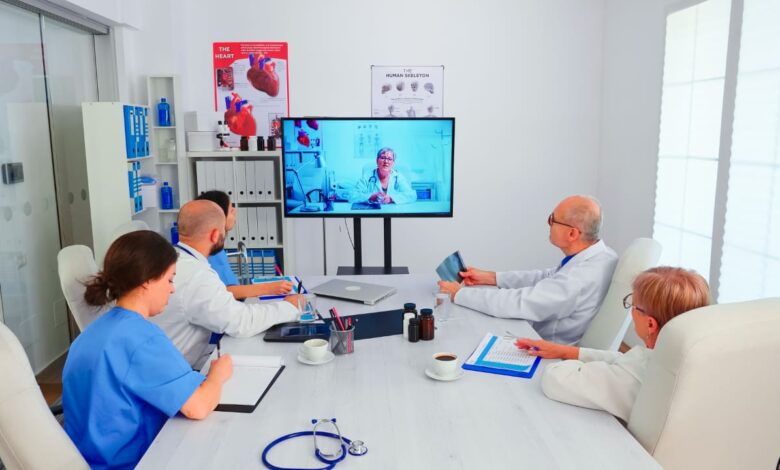
Remote Patient Monitoring (RPM) companies are in the business of offering the infrastructure, technology, and clinical services needed to support the monitoring of the health status of patients beyond the walls of the traditional clinical care environment. Such firms act as important collaborators to medical care providers since they allow them to bring care leisurely out of the clinic and constantly monitor vital patient signs in real time.
Here in a nutshell is how RPM companies fill the gap between the doctor’s office and the patient. Their products include both hardware, which can be blood pressure monitors, glucose meters, and wearable devices, as well as software platforms to transmit and manage health data safely. Their services become especially valuable in the context of chronic disease management, patient outcomes improvement, and lowering hospital readmissions.
The Business Model and Scope
Remote Patient Monitoring companies most commonly fall into one of three models device-only, platform-as-a-service (PaaS), or full-service RPM. Device-only companies are specialized in the production and distribution of FDA-approved medical devices. The platform-based RPM companies include cloud-based software, which collects data via multiple sources, trends visualizations, and Electronic Health Records (EHRs) integration.
Full-service RPM companies combine devices, software, and clinical staffing. They take care of the shipment and onboarding of devices as well as monitor and follow up on a daily basis. This model would be particularly attractive to clinics that do not have the resources or expertise to run remote care programs internally.
RPM companies earn money either by having direct contracting agreements with providers, by insurance reimbursement (including Medicare CPT codes 99453, 99454, 99457, and 99458), or by subscription-based model.
How RPM Companies Support Healthcare Providers
RPM companies take a big weight off the shoulders of clinics and physicians by taking care of the logistics, technological support, and patient communication required to make a remote monitoring program successful. Once a clinic has joined forces with an RPM company, the workflow usually begins with onboarding patients- shipping out monitoring devices, teaching patients how to use them, and connecting them to the RPM platform.
These companies offer live dashboards and alert clinicians once abnormal readings are identified after the program is implemented. Others even provide around-the-clock clinical assistance, so a patient can talk to a nurse or care coordinator when an alert is generated. Such service level assists in making sure that the providers are capable of acting on the health data in a timely fashion without the necessity to micromanage all metrics.
Besides, numerous RPM partners deal with compliance and paperwork required to bill, which takes the administrative burden off internal employees.
Key Benefits for Patients
Constant monitoring of patients enrolled in RPM programs enables their providers to identify a problem in its early stages and assist before a small concern develops into a big complication. It is particularly important when it comes to people with high-risk factors like heart failure, high blood pressure, or diabetes.
On the patient side, RPM allows decreasing the number of in-person visits, making it more convenient, and helping the patient to become more engaged in their health. Having the capability to get feedback on their care team on a real-time basis makes the care more dynamic and responsive. It also gives them peace of mind that all is well since someone is always checking their vital signs.
RPM companies offering educational tools, mobile applications, and patient-friendly devices are more likely to experience patient satisfaction and adherence.
Technology and Integration
A Remote Patient Monitoring company is all about technology. They should have HIPAA-compliant platforms that are safe and can integrate with current EHR systems. The fewer forms of integration there are, the more likely providers are to include RPM data in patient records and decision-making.
Predictive analytics and AI are the new additions to the platforms of many companies. They can be used to discover patterns, estimate possible health occurrences, and rank alerts by seriousness-allowing providers to concentrate on patients requiring instant care.
Even some companies take it one step further and provide APIs that enable third-party developers to create bespoke applications, introducing further flexibility and scale to the healthcare ecosystem.
Challenges Faced by RPM Companies
The RPM industry is experiencing rampant growth but it is not devoid of challenges. One major hurdle is device adherence. In case patients miss using their devices or forget to send data as they should, the whole system is rendered useless. In response to this, several RPM businesses rely on automated reminders, human follow-up, and ease-of-use interfaces to promote compliance.
Another challenge is managing large volumes of data. It is not every reading that would need intervention thus RPM platforms need to be intelligent enough to navigate through the noise and only escalate what really matters. This involves constant improvement of alert algorithms and triage systems.
There are also reimbursement issues. Not every payer reimburses RPM services in the same manner, and the billing regulations may be demanding. RPM companies ought to keep abreast of coding rules and make sure that they assist providers to be compliant.
Conclusion
Remote Patient Monitoring companies are transforming healthcare by extending the concept of continuous care into the home of the patient, through data. They allow earlier interventions, improved chronic disease management, and enhanced provider-patient relationships simultaneously with lower costs and enhanced health outcomes.
Nevertheless, operational and regulatory risks notwithstanding, the growth in demand for RPM services is only going to grow as the industry proceeds with its transformation towards value-based care. RPM companies are not a luxury, but a necessity in the future of healthcare to both providers who want to modernize their practice and to patients who want more convenient and personalized care.