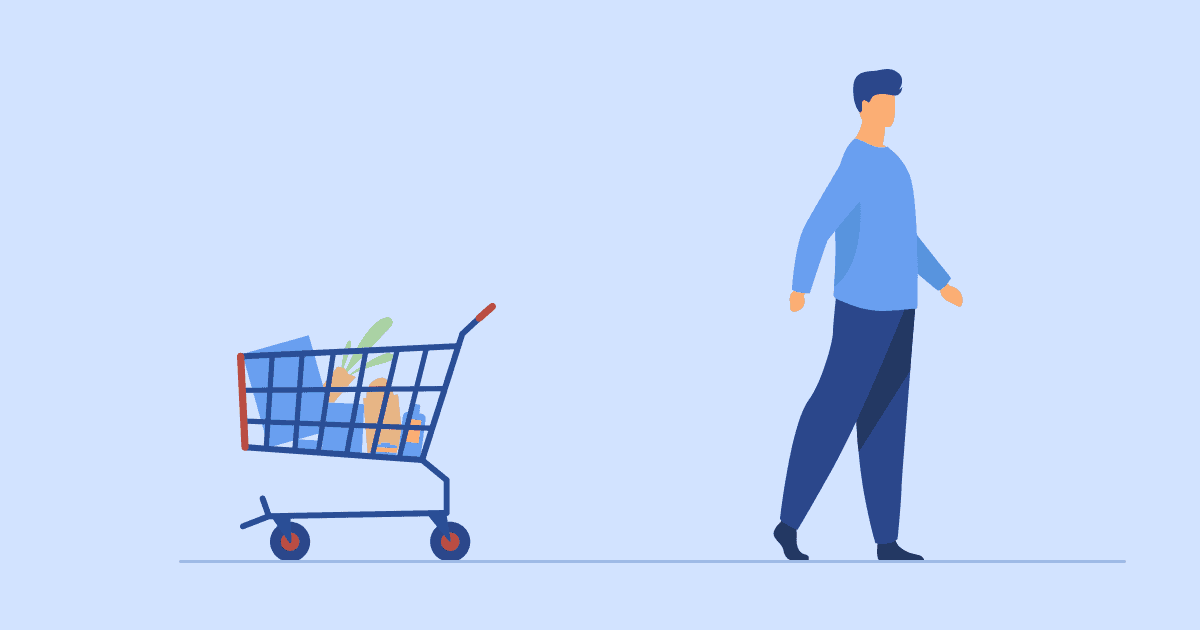
Sonam finds a new D2C brand and is instantly hooked to its website. She carefully looks over the items, chooses what she wants, and adds them to her cart immediately. But she left as quickly as she came, with no explanation and no purchase. Does this sound familiar? People call this “cart abandonment,” and it’s a significant problem in e-commerce that costs businesses billions of dollars in sales every year.
The Baymard Institute says that the average cart abandonment rate is over 70%. This means that a lot of possible sales go through the cracks. But why do people leave their carts, and how can you measure how it affects your business? For e-commerce firms that want to improve their tactics and increase conversion rates, understanding the cart abandonment rate is quite important.
In this article, we’ll dive deep into how cart abandonment affects growing online businesses, so make sure to read till the end.
What is Cart Abandonment, Really?
Customers leave a website without buying anything or finishing the transaction after adding things to their online shopping basket. This is called “cart abandonment.”
Cart abandonment is a problem that eCommerce firms have been dealing with for a long time. During holidays and festivals, when competition for consumers’ attention is at its highest, these numbers go up.
It’s not possible to get back all of the abandoned carts, but the good news is that with the appropriate kind of nudges, you can get enough consumers back to make up for the loss.
E-commerce enterprises should keep an eye on their cart abandonment rate because it is closely linked to their conversion rates and income. A high cart abandonment rate is a common symptom that the checkout process or customer experience is not going well.
The Hidden Costs of Cart Abandonment
So, why is cart abandonment a problem for online businesses? Well, there are a couple of reasons why that is the case.
Wasted Customer Acquisition Spend
CAC, or customer acquisition cost, is what you spend on getting the customer to know about you. It can be through direct ads or subtle marketing, you spend some amount of money to get that person to come to your website. When they abandon the cart, it essentially ends up being a waste of the money spent, as you didn’t make any money from it whatsoever.
Impact on Customer Lifetime Value (CLV)
But that’s not all, once a customer abandons the cart, there’s a good chance that they will never come back again. This is either because they’re skeptical or self-conscious. But regardless, this affects the CLV by a huge margin, as you lost a customer for the rest of your life.
Brand Trust & Experience Penalties
Let’s be real, there must have been some form of friction between the customer and the user, which is why it is a direct attack on your brand trust. “Their checkout process was too complicated,” or “I don’t know if the brand is trustworthy”, these are some of the things customers who abandon your cart will say about you. A poor experience directly translates to an abandoned cart and a hit to your brand’s reputation.
Operational Inefficiencies
If someone adds a product to the cart, you cannot sell it to someone else. This blocks a good chunk of inventory, and you will be forced to write “out of stock” even if there is fresh stock available. This means direct revenue loss, as that product cannot be sold anywhere else.
Measuring the Real Cost: Framework for Businesses
Let’s first understand the sectors and how much cart abandonment they have. The table below will give you an idea:
| Industry | Overall Avg. Rate | Mobile | Desktop | Tablet | Key Drivers |
| Retail & E-commerce | ~70–75% | ~82% | ~68% | ~72% | Shipping costs, casual browsing, checkout friction |
| Travel & Airlines | ~85–90% | ~89% | ~78% | ~83% | Research-heavy, long booking forms, and price comparison |
| Fashion & Apparel | ~75% | ~84% | ~69% | ~74% | Size/fit doubts, return worries, impulse hesitation |
| Luxury Goods | ~80% | ~86% | ~71% | ~76% | Price sensitivity, high-value comparison shopping |
| Electronics | ~68–72% | ~80% | ~66% | ~70% | High-ticket hesitation, spec comparisons |
| Financial Services | ~83% | ~87% | ~75% | ~79% | Long forms, trust/security concerns |
| Subscription Services | ~75% | ~82% | ~68% | ~72% | Trial vs. paid friction, hidden fees |
Now, let’s understand how you can calculate the cart abandonment rate for your business.
The cart abandonment rate is the number of abandoned carts divided by the number of transactions started, times 100.
Let’s say 500 people add items to their carts, but only 150 of them buy them. The cart abandonment rate would be:
(500 – 150) / 500 × 100 = 70%
Now, let’s do a hypothetical calculation to understand how much cart abandonment actually costs your business.
- Monthly cart value: ₹50 lakhs
- Abandonment rate: 70% → Gross Loss = ₹35 lakhs
- Abandoned carts: 2,000
- Customer Acquisition Cost (CAC): ₹400
→ Acquisition Wastage = 2,000 × 400 = ₹8 lakhs - First-time users abandoned: 1,500
- Average Customer Lifetime Value (CLV): ₹3,000
→ Lost CLV = 1,500 × 3,000 = ₹45 lakhs - Operational/Experience Penalties: ~₹2 lakhs (support costs, inventory impact)
Strategies to Minimise Abandonment
There are many strategies to minimise cart abandonment. If you utilise them, the calculation mentioned above can be minimised a lot. Let’s understand with the help of a table.
| Strategy | What It Means | Key Actions |
| Optimize Checkout UX | Simplify the path to purchase | One-click checkout, auto-fill forms, guest checkout, fewer clicks |
| Payment Experience Matters | Ensure smooth, trusted payments | Offer UPI, wallets, BNPL; use intelligent routing; display trusted gateways |
| Smart Retargeting | Re-engage customers who left | Cart recovery emails, push notifications, personalized offers; send reminders at 1h, 24h, 3–5 days |
| Transparency in Pricing | Build trust with upfront costs | Show shipping/taxes early, avoid hidden fees, clear breakdown of the total cost |
| Leverage Analytics | Use data to spot and fix issues | Track drop-offs by stage, A/B test checkout/payment flows, segment new vs. returning users |
Conclusion
Cart abandonment is something every business hates from the core of their heart. It can mean significant money loss if not taken into account carefully. With transparent pricing and a smooth checkout experience, along with some other strategies, it can be minimised a lot.