Many individuals criticize Formula One (F1), labeling it as an unnecessary risk or a fleeting pursuit for fame and validation. However, to claim that only what is truly necessary holds value in life overlooks the human desire for passion, adventure, and excitement – elements that fuel our deepest ambitions. Furthermore, the pursuit of fame pales in comparison to the raw intensity and unparalleled thrill that courses through a driver’s veins when the engine roars and the adrenaline surges. In those moments, the quest for validation is far from their minds; it is the rush of the experience itself that matters most.
Indeed, there is no question that clinging to the motorsport lifestyle is inherently dangerous and significantly jeopardizes your safety. Remember, you can take a risk only if the risk is worthwhile to take.
“How deep does my resilience run?” – that’s the question you must address if you plan on flourishing in this glamorous yet very cutting-edge sport. True resilience is a quiet force that lives within and is tested in the face of fear, failure, and sacrifice. Are you ready to face it? Let’s find out!
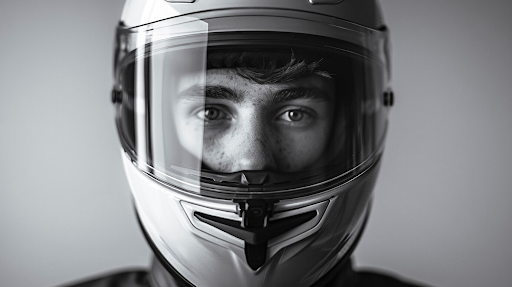
How naturally talented are F1 drivers?
Is there such a thing as natural talent when wishing to become the master of Scuderia Ferrari?
Generally, hard work overcomes talent when talent fails to work hard. However, when talented people strive for excellence, you stand absolutely no chance. No matter what you do, you’ll always lose.
If we dive throughout the history of F1, we’d face a plethora of talented drivers who have made quite an impression on the world of motorsport. For example, Max Verstappen has always stood out as an extremely rare natural talent. He is the youngest driver to ever win a F1 Grand Prix, and he effortlessly distinguishes himself from many of his peers who have had to work tirelessly to reach similar levels of performance. At the young age of 18, he made his debut for Red Bull and won the Spanish Grand Prix, having no idea that after several years, he would become a four-time world champion.
After winning 63 Grands Prix across 10 seasons, Max Verstappen continues to make history. If you’re interested to know more about his stormy entry in the racing industry, you can anytime browse on Grandprixnews, as this website covers the story of many F1 drivers, Max Verstappen included.
In short, talent is great if you want to win in F1, but success isn’t exclusively made of innate talent. It requires years of deliberate practice, a great engineering team, financing, luck, real effort, and true resilience, a word that encapsulates the aspects we’re going to discuss below.
Commitment
Many fancy the idea of a “go-kart circuit” at the beginning, but very few genuinely make it to the F1 racing teams. The first thing that differentiates drivers-wannabe from real legends is commitment. For those who don’t want this dream to vanish, you must be prepared for years of commitment.
It would be a terrible mistake to believe that once you know how to handle the car on the racetrack, success is yet to come. The first thing that requires training is your mind. There’s no room for excuses and procrastination in the F1 world. Without discipline, you don’t stand a single shot.
Behind those minutes of glory on the track, there are lots of missed family dinners and birthdays. You can’t aspire to become the next Lewis Hamilton or Charles Leclerc while never managing to give up on the nightlife, for example. That doesn’t mean your existence will gravitate fully around the sports, but most of the time, that’s the case. Many F1 drivers will have started off their racing career around 8-14 years, and some of them began their journey even at four or five years old, and they’ve never stopped fighting for their dream ever since. Check Formula 1 news for more information!
Adaptability
Anyone can drive fast, so what’s separating those rare all-time greats from the good ones? Well, it’s the power to keep their minds flexible, which is also known as adaptability. Cars are ever-changing, and not only in terms of configuration. There are numerous unusual circumstances in the racing scene, such as different settings, changing teams, various brake shapes, and specific engine braking settings. All matter in subtle yet very significant ways. Let’s say you can perfectly handle a Mercedes on the track, but suddenly, you have to change teams with an Alfa Romeo. And then what? Adapt or lose, simple.
Nutrition & Fitness
Every important industry implies its own eating habits. Unlike modeling, a field often ridiculed for its rigid food regimes – where models might only indulge in a slice of cake at weddings, under the condition of making room for a 45-minute cardio session the next day – the racing industry embraces proper nutrition. In F1 races, where drivers can lose 2-3 kg of fluid, burn through around 1,500 calories, and lose nearly 5% body weight, fueling the body is imperative. Peak performance requires carbohydrates, fruit, vegetables, protein, and lots of water. Here’s what the menu for a race day looks like:
- Breakfast: Porridge sweetened with honey, along with berries, bananas, and nuts.
- Lunch: Salad, chicken breast, and boiled vegetables. Fruits for dessert!
- Dinner: Soup followed by grilled fish, sweet potatoes, and salad.
No one says that F1 drivers don’t indulge in a cheeseburger sometimes—they’re human, after all. But their dishes are mostly meticulously planned.
Moreover, what keeps drivers fit for the season is their intense training schedules. Starting with early January, F1 drivers are back in the gym, each one accompanied by performance coaches. Besides weight lifting, they do boxing, cardio, swimming, and mountain bike rides. A distinctive feature of F1 drivers is muscular necks, so their gym sessions include weights hanging from their necks and a trainer that pulls resistance to stimulate the lateral forces. Core strength is also significant, so they do a lot of bridges and planks, which not only builds strength but also teaches them to master the art of breathing control.
Final Thoughts
Now that we’ve uncovered the relentless dedication behind those hard-earned medals, the question remains: Do you have what it takes? The discipline, the sacrifice, the unwavering commitment to excellence?