Introduction
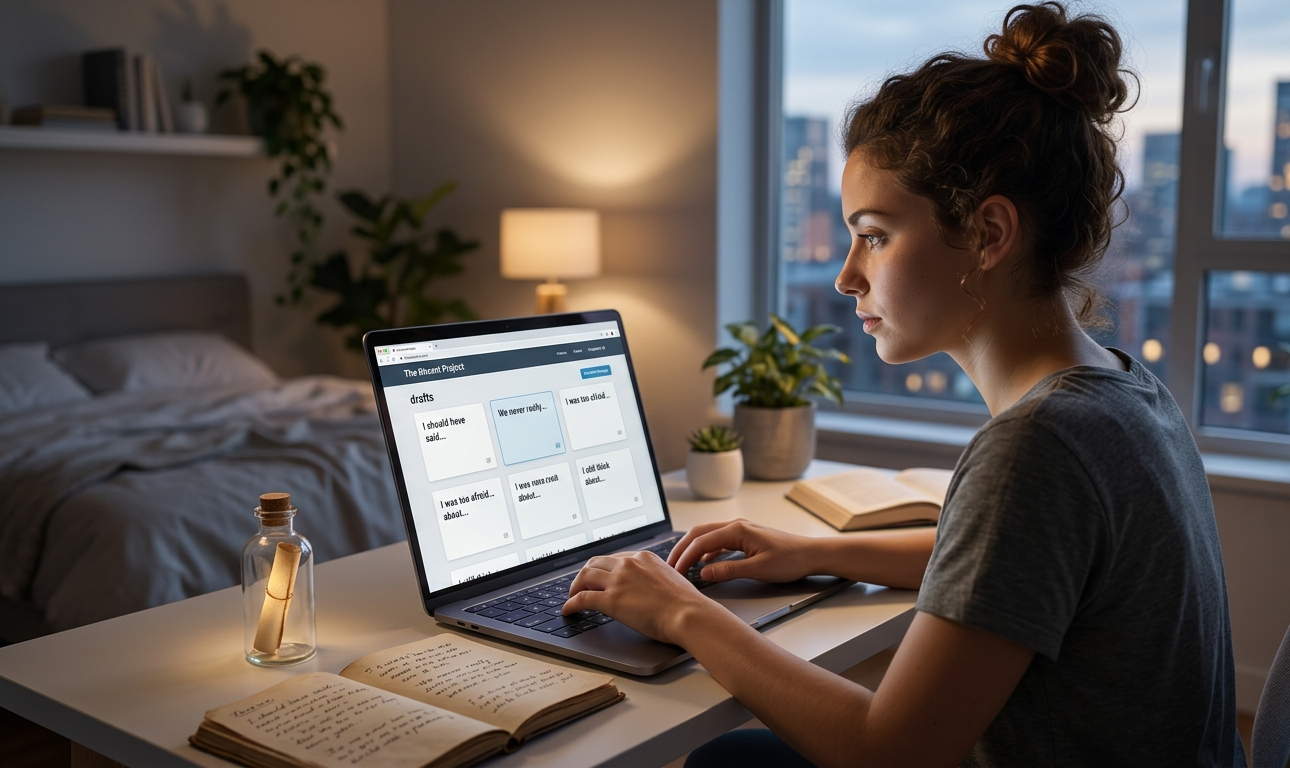
We’ve all been there—staring at a message box, typing something heartfelt, and then… deleting it. Maybe it felt too vulnerable. Maybe the timing wasn’t right. Or maybe we just didn’t have the courage to hit “send.” That quiet hesitation, repeated millions of times across the world, is exactly what The Unsent Project captures.
Started in 2015 by conceptual artist Rora Blue, this unique digital archive has grown into a powerful emotional landscape filled with anonymous messages people never sent to their “first loves.” But calling it just a website would be an understatement—it’s part art, part therapy, and part collective human diary.
Let’s unpack what makes this project so compelling, why it resonates with millions, and how it’s quietly redefining the way we process emotions in the digital age.
What Is The Unsent Project?
At its core, The Unsent Project is an online platform where people submit anonymous messages they wrote—but never sent—to someone they once deeply cared about. That “first love” doesn’t necessarily mean a romantic partner. It could be:
- A childhood best friend
- A parent or sibling
- A lost connection
- Even a beloved pet
The beauty lies in its simplicity. No accounts. No identities. Just raw, unfiltered emotion.
These messages are then categorized by color—each representing a different emotional tone. For example:
- Red – anger or passion
- Blue – sadness or longing
- Yellow – hope or warmth
- Black – grief or despair
With over 5 million submissions, the platform has evolved into a living archive of human emotion—messy, honest, and deeply relatable.
The Story Behind the Project
From Personal Heartbreak to Global Movement
The origin of The Unsent Project is as personal as the messages it collects. Rora Blue created it after experiencing a breakup, using it as a way to explore how people associate color with feelings—especially love.
Initially, it wasn’t meant to go viral. It started as a conceptual art experiment. But something unexpected happened: people connected with it—deeply.
As submissions poured in, the project transformed into something much bigger:
- A digital confessional space
- A social experiment
- A global art installation
Blue later expanded the concept into physical exhibitions, turning selected messages into visual collages displayed in galleries worldwide. This blend of digital and physical storytelling gave the project even more emotional weight.
Why The Unsent Project Feels So Real
Raw Emotion Without Filters
Unlike social media, where everything is curated, polished, and often exaggerated, The Unsent Project thrives on authenticity. There’s no pressure to impress—only to express.
People write things like:
- “I wish I told you I was proud of you.”
- “You were my home, and I didn’t even realize it.”
- “I forgive you, but I’ll never forget.”
These aren’t crafted for likes or validation. They’re written because they need to be.
Anonymity Creates Honesty
The anonymity is what makes it powerful. When no one knows who you are, you’re free to say what you truly feel.
That freedom leads to:
- Brutal honesty
- Vulnerability without fear
- Emotional clarity
It’s almost like therapy—except the audience is the entire world.
Case Study: How The Unsent Project Helps Emotional Closure
Scenario: A Message Never Sent
Let’s consider a realistic case study.
Ali, a 26-year-old from Karachi, had a close friend during university. Over time, feelings grew, but he never confessed. After graduation, they drifted apart. Years later, he still found himself thinking about her—what could have been, what he should’ve said.
One day, he came across The Unsent Project.
Instead of overthinking, he wrote:
“You were the one person I never had to pretend with. I wish I had the courage to tell you that I loved you—not as a friend, but as something more.”
He submitted it anonymously.
What Happened Next?
- He felt immediate relief—like a weight had lifted
- He stopped replaying “what if” scenarios constantly
- He gained emotional clarity and moved forward
Key Takeaway
The act of writing—and releasing—the message created a sense of closure, even without a response.
That’s the quiet power of The Unsent Project:
You don’t need a reply to heal. Sometimes, expression alone is enough.
The Role of Colors in Emotional Storytelling
One of the most fascinating aspects of the project is its color-based system. It’s not random—it’s psychological.
Each color acts as a lens through which emotions are interpreted.
Why Colors Matter
- They create visual categorization
- They help users navigate emotional themes
- They add an artistic dimension to the experience
For example:
- Browsing blue messages feels like stepping into a world of nostalgia and heartbreak
- Red messages often carry intensity—love, anger, or unresolved passion
- Green might hint at growth, healing, or jealousy
This system turns the platform into more than just text—it becomes an emotional map.
Cultural and Social Impact
A Mirror of Collective Emotion
With millions of entries from around the world, The Unsent Project has become a reflection of shared human experiences.
Despite differences in language, culture, and background, the themes remain strikingly similar:
- Love that wasn’t expressed
- Apologies never delivered
- Goodbyes left unfinished
It highlights a simple truth:
We’re more alike than we think.
Influence on Digital Culture
The project has also inspired:
- Mobile apps with similar concepts
- Social media trends around “unsent messages”
- Creative writing communities
It’s reshaping how people think about communication—not just what we say, but what we don’t.
The Artistic Perspective
Digital Art Meets Human Emotion
From an artistic standpoint, The Unsent Project sits at the intersection of:
- Conceptual art
- Digital storytelling
- Emotional data collection
Rora Blue analyzes submissions daily, using them as material for ongoing art projects. The messages themselves become:
- Data
- Narrative
- Expression
It’s art built from real feelings—not imagination.
Physical Exhibitions
Taking the project offline, Blue has created installations featuring:
- Printed messages
- Color-coded displays
- Immersive environments
These exhibitions allow people to physically walk through emotions—almost like stepping inside someone else’s memories.
Why People Keep Coming Back
It Feels Personal—Even When It’s Not
Reading messages on the platform often feels like someone is describing your own story.
You might come across a line and think:
“Wait… that’s exactly how I feel.”
That connection keeps users engaged.
It’s Addictive in a Quiet Way
Not in a flashy, dopamine-hit kind of way—but in a reflective, late-night scrolling kind of way.
You don’t just read—you feel.
Psychological Insights Behind Unsent Messages
Why We Don’t Send Certain Messages
There are several reasons people hold back:
- Fear of rejection
- Timing issues
- Emotional vulnerability
- Desire to avoid conflict
Instead of expressing, we internalize.
The Cost of Silence
Unexpressed emotions can lead to:
- Overthinking
- Regret
- Emotional stagnation
The Unsent Project provides an outlet—without consequences.
How to Use The Unsent Project
If you’re curious, getting started is simple:
- Visit the website
- Write your message honestly
- Choose a color that represents your emotion
- Submit anonymously
You can also browse messages by:
- Name
- Color
- Recent submissions
No sign-ups. No barriers. Just expression.
Is It Really Helpful or Just Emotional Dumping?
This is a fair question.
The Balanced View
Helpful aspects:
- Encourages emotional release
- Provides perspective
- Creates a sense of shared experience
Limitations:
- Doesn’t replace real communication
- Doesn’t resolve external conflicts
- Can sometimes reinforce nostalgia
So, it’s best seen as a tool for reflection—not a solution to everything.
The Future of The Unsent Project
Given its continued growth, the project is likely to evolve further:
- More interactive features
- Expanded artistic exhibitions
- Deeper emotional analysis
But at its core, it will probably remain the same—a place where unsent words finally exist.
Conclusion
The Unsent Project isn’t just about messages that were never delivered—it’s about emotions that never found a home.
In a world where communication is instant and constant, it reminds us of something surprisingly human:
Not everything we feel gets said.
And maybe that’s okay.
Because sometimes, writing it down—even anonymously—is enough to let it go.
Want more guides like this? Head over to our homepage and discover fresh content updated regularly.
FAQs
What is The Unsent Project?
It’s an online platform where people anonymously submit messages they never sent to their “first loves,” categorized by emotion-based colors.
Who created The Unsent Project?
Conceptual artist Rora Blue launched it in 2015 as an art experiment exploring love and color associations.
Can anyone submit a message?
Yes, anyone can submit a message without creating an account. The process is completely anonymous.
Is The Unsent Project free to use?
Yes, it’s entirely free for both submitting and browsing messages.
What kind of messages are allowed?
Messages typically include:
- Love confessions
- Apologies
- Regrets
- Closure notes
As long as they remain respectful and authentic, they fit the platform.
Does submitting a message really help?
For many people, yes. It provides emotional release and clarity, even without receiving a response.
Can you find messages about specific people?
Yes, users can search messages by name, though results are anonymous and may include multiple unrelated entries.