Businesses today are drowning in data. But the challenge isn’t the lack of data—it’s managing it effectively and processing it quickly enough to drive decisions. Traditional ETL (Extract, Transform, Load) workflows often fall short in high-speed environments. They’re slow, batch-oriented, and struggle to keep up with the demands of real-time insights. For organizations relying on these outdated processes, the result is delayed decisions, missed opportunities, and inefficient operations.
Apache Kafka has emerged as a game-changer for modern ETL workflows. As a distributed event streaming platform, Kafka enables real-time data ingestion, transformation, and delivery at unmatched speed and scale. This blog explores how Kafka can transform your ETL workflows, helping your organization process data at lightning speed while ensuring scalability and reliability.
Introduction to Kafka ETL
Apache Kafka has become a cornerstone for organizations seeking real-time data processing solutions. To understand its transformative potential, it’s essential to explore the key aspects of Kafka ETL and why it’s a superior choice for high-speed data workflows.
Challenges of Traditional ETL
Traditional ETL processes are typically batch-oriented, which means they process data at scheduled intervals. This creates several pain points:
- Latency: Delays in processing result in outdated insights.
- Scalability: Limited ability to handle increasing data volumes or speed.
- Complexity: Heavy reliance on manual configurations and maintenance.
Why Kafka for ETL?
Apache Kafka addresses these challenges with its distributed event streaming capabilities:
- Real-Time Data Processing: Kafka ingests and processes data in real-time, enabling immediate insights.
- Scalable Architecture: Kafka scales horizontally, making it ideal for high-speed and high-volume environments.
- Fault Tolerance: Built-in replication ensures data reliability, even in the event of failures.
Kafka ETL redefines how businesses approach data integration by shifting from batch processing to continuous data streaming. Let’s understand the core components of Kafka ETL and how they power real-time data pipelines.
Core Components of Kafka ETL
Kafka ETL relies on an ecosystem of components that work together to enable seamless data ingestion, transformation, and delivery. Understanding these components is essential for building high-speed, real-time data pipelines.
- Apache Kafka
At the heart of Kafka ETL lies Apache Kafka, a distributed event streaming platform. It acts as a message broker, organizing data into topics and enabling real-time communication between producers (data sources) and consumers (data sinks). Kafka’s ability to handle high-throughput data streams makes it ideal for modern ETL workflows.
- Kafka Connect
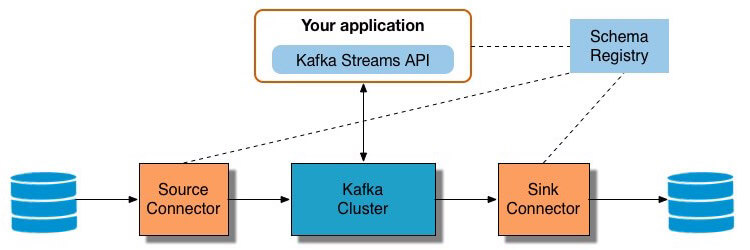
Kafka Connect simplifies integration by offering a wide range of pre-built source connectors (for data ingestion) and sink connectors (for data delivery). This eliminates the need for custom development, allowing businesses to connect Kafka with databases, cloud storage, and analytics tools effortlessly.
- Kafka Streams
Kafka Streams is a lightweight yet powerful library for real-time data transformation. It allows developers to filter, aggregate, and enrich data directly within the Kafka ecosystem. By enabling complex transformations in-stream, Kafka Streams eliminates the latency associated with external processing.
How These Components Work Together
- Ingestion: Data from a MySQL database is ingested into Kafka topics using a JDBC source connector.
- Transformation: Kafka Streams applies business logic to transform the raw data.
- Delivery: The processed data is sent to a data warehouse like Snowflake using a sink connector.
These core components form the foundation of Kafka ETL, enabling businesses to build scalable and efficient pipelines. Next, let’s explore how to design high-speed ETL workflows with Kafka.
Designing High-Speed ETL Pipelines with Kafka
Building efficient Kafka ETL workflows requires careful planning and adherence to best practices to achieve high performance and scalability. Here’s how you can design a pipeline that meets the demands of high-speed data processing.
Step 1: Architecting for Scalability
- Partitioning: Divide topics into multiple partitions to distribute data across Kafka brokers. This parallelism enhances throughput and ensures efficient processing of large datasets.
- Replication: Enable replication to ensure data availability. Each partition should have at least two replicas to avoid data loss during failures.
Step 2: Ensuring Data Consistency
- Use exactly-once semantics in Kafka to prevent duplicate records or missed events during processing.
- Implement schema management to handle evolving data structures without disrupting downstream workflows.
Step 3: Optimizing Performance
- Batch Size and Compression: Adjust producer batch sizes and enable compression to optimize network usage and reduce latency.
- Consumer Lag Monitoring: Regularly monitor consumer lag to ensure that downstream systems keep up with Kafka’s data streams.
Step 4: Fault Tolerance and Recovery
- Enable log retention policies to store data for longer durations, allowing for reprocessing in case of failures.
- Implement error handling and retries to manage transient issues without interrupting the pipeline.
- Example Workflow
- Data is ingested from a REST API into a Kafka topic.
- Kafka Streams performs real-time filtering and enrichment.
- The transformed data is delivered to a cloud-based analytics platform for visualization.
With a solid architecture in place, you can achieve reliable and efficient data processing. But what’s the importance of integrating Kafka ETL with data warehouses and analytics platforms? Let’s understand that in the next section.
Integrating Kafka ETL with Data Warehouses and Analytics Platforms
Integrating Kafka ETL with data warehouses and analytics tools is crucial for turning raw data into actionable insights. This final step in the ETL process ensures that transformed data is readily accessible for reporting, visualization, and decision-making.
1. Seamless Data Loading
- Use Kafka Connect Sink Connectors to deliver processed data from Kafka topics directly to data warehouses like Snowflake, BigQuery, or Redshift.
- Ensure compatibility by configuring connectors to match the schema and structure of the target systems.
2. Real-Time Analytics
Kafka ETL enables real-time analytics by continuously streaming transformed data to visualization platforms like Tableau or Power BI. This allows organizations to monitor metrics, track KPIs, and make data-driven decisions without delay.
3. Optimizing Performance
- Batching: Configure batch sizes to optimize the ingestion rate into analytics platforms while minimizing resource usage.
- Data Partitioning: Partition data based on key fields (e.g., region, product category) to speed up queries and enhance reporting accuracy.
4. Industry Use Cases
- E-commerce: Real-time updates on customer behavior to drive personalized marketing.
- IoT: Streaming sensor data for predictive maintenance and operational efficiency.
- Financial Services: Monitoring transactions for fraud detection and compliance reporting.
This integration ensures that insights are real-time and actionable, driving growth and innovation. Finally, let’s understand how Hevo Data can help your team with ETL workflows.
How Hevo Data Simplifies Kafka ETL
Hevo Data makes Kafka ETL implementation seamless and efficient by addressing key challenges in traditional ETL processes:
- No-Code Interface: Hevo eliminates the complexity of configuring Kafka by providing an intuitive, no-code platform for building ETL workflows.
- Built-In Transformation: With this tool, you can clean, enrich, and transform data directly within the pipeline, reducing the need for external tools.
- Real-Time Integration: Hevo supports real-time data streaming, ensuring your analytics platforms and data warehouses always have up-to-date information.
- Automated Schema Handling: This tool automatically manages schema changes, ensuring data consistency across systems.
- Comprehensive Support: With 24/7 support and proactive monitoring, Hevo minimizes downtime and ensures smooth operations.
By taking assistance from Hevo, businesses can streamline Kafka ETL pipelines and focus on extracting actionable insights rather than managing technical complexities.
Conclusion
Transforming ETL workflows with Kafka enables businesses to handle high-speed data processing. From ingesting data to transforming and integrating it with analytics platforms, Kafka ETL redefines how organizations manage their data.
While Kafka offers capabilities, tools like Hevo further enhance their potential by simplifying workflows and automating complex processes. Whether you’re starting with Kafka or optimizing an existing ETL pipeline, Hevo provides the reliability and efficiency needed for success.
Ready to streamline your Kafka ETL workflows? Login with Hevo Data today and experience seamless, real-time data integration built for modern business needs.