Applying for the free boiler scheme can help you replace your old, inefficient boiler for free. But you will need to provide some documents for this.
These documents verify you fall under the guidelines set by the government’s ECO4 initiative. If you fail to provide the correct documents, your claim can be delayed or even refused. But what documents will you need? Let’s break them down one by one.
What Documents Are Required?
To apply successfully, you will need to provide several key documents. These confirm your financial situation, property details, boiler age, and identity. Below is a breakdown of each required document and why it is important.
Proof of Homeownership or Tenancy
To receive your free boiler grant, you will need to either own your property or be a private tenant. One of the following will need to be supplied by you:
- For Homeowners: Proof of property ownership can be given by one of the following documents.
- For Private Tenants: Private Tenants can provide their landlord’s letter, where their landlord has granted them the right for the replacement of the boiler.
Social housing tenants will not generally qualify for the scheme, their landlords being liable for the upgrading of the heat.
Proof of Income or Benefits
The free boilers initiative is for individuals from low-income groups and those receiving benefits. To determine you qualify, you will need to provide:
- Payslips (if you are employed) – Typically the last three months payslips.
- Bank statements – To reflect income and benefit payments.
- Benefit award letters – If you claim benefits you will need to provide the latest formal letter from the relevant authorities establishing payments. Proof will need to be given that you claim one of the relevant benefits, for example:
- Universal Credit
- Pension Credit (Guarantee Credit or Savings Credit)
- Child Tax Credit
- Working Tax Credit
- Income Support
- Jobseeker’s Allowance (JSA)
- Employment and Support Allowance (ESA)
The proof can also be the Department for Work and Pensions (DWP) or a letter from HM Revenue & Customs. This letter must be recent, generally not over the past 12 months.
Proof of Household Income (If Not Claiming Benefits)
If you don’t qualify for benefits but you make very little, you can also apply under some circumstances. In this scenario, you will need to provide:
- Recent wage slips (latest three months).
- Bank statements showing your income
- Self-assessment tax return (for the self-employed)
This proof is useful for reviewing whether your household income is under the eligibility level.
Proof of Boiler Condition
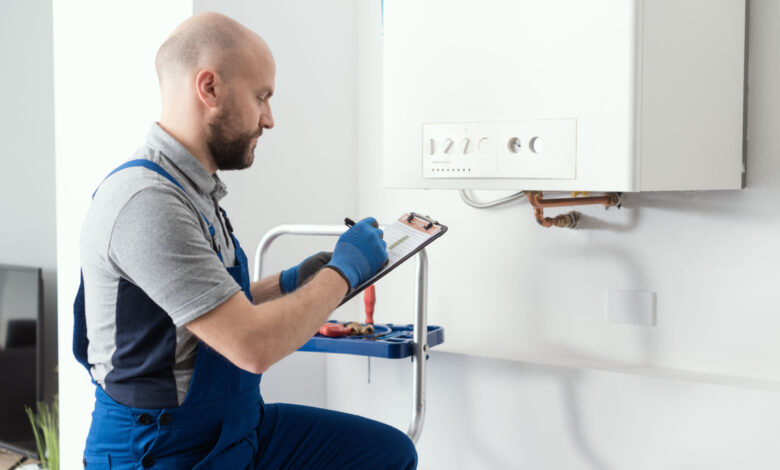
Your current boiler will need to be faulty, inefficient, or outdated for you to qualify for replacement.
- Photographs of your existing boiler, its make and model, and its condition
- A gas safety certificate (if available)
- A report from your local gas engineer explaining your gas appliance is not economical or is beyond economical repair.
Some providers will send one of their assessors around to inspect your boiler before issuing your grant.
Proof of Identity and Address
To confirm your identity and residence, you will need to provide:
- A valid passport or driving licence
- A recent utility bill (water, gas, or electricity) with your name and address
- A council tax bill or bank statement (dated within the last three months)
This ensures that the grant is awarded to the right person at the correct property.
Energy Performance Certificate (EPC)
An Energy Performance Certificate (EPC) will measure the energy efficiency level of your property. Most providers will require you to provide an EPC to confirm your property is energy-efficient enough for the scheme.
If you possess one, you can send over a copy. Otherwise, the grant provider can make arrangements for you to be assessed for the purpose of creating one.
Landlord Permission (For Tenants)
If you rent your property from a private landlord, your landlord will need to consent to the replacement of the boiler. You will require your landlord’s signed letter containing:
- Their approval for the boiler replacement
- Confirmation that the property is theirs
- Their contact details for verification
Without this letter, your application will not progress.
Disability or Health Condition Documentation (If Applicable)
Some grants prefer those where one of the residents has some medical condition or disability exacerbated by the cold. If this is your case, you will require:
- A doctor’s letter testifying to your medical condition
- A disability benefits award letter
- Medical records for something like heart disorder, arthritis, or asthma
Providing this evidence can make you stronger for being granted the grant.
How to Apply for a Free Boiler Grant
Once you have the documents required, follow the steps given below for applying:
Step 1: Confirm your Eligibility
Use an online checker tool from the website of an accredited installer. Fill in your income, benefits, and house details to find out if you qualify.
Step 2: Seek Out a Registered Installer
Only government-approved installers can provide free boilers. Make sure to choose a trusted provider to avoid scams.
Step 3: Booking the Home Survey
A professional will visit your residence for:
- Check your boiler’s condition.
- Confirm your EPC rating.
- Assess insulation need (you can also qualify for insulation for zero cost).
Step 4: Submit Documents
Send scanned copies of your benefits letters, proof of income, boilers, and ID. Be sure the documents you send are legible and recent to avoid delays.
Step 5: Install the Boiler
If approved, the engineer will:
- Remove your outdated boiler
- Install a replacement A-rated gas-fired condensing boiler.
- Ensure the heat is functioning properly.
Most installations only require one day, and you will immediately save money on your heat expenses.
Common Reasons for Application Delays
Applications can also be deferred or refused when:
- Documents are not available or unreliable
- Proof of benefits or income is outdated
- The existing boiler does not qualify as inefficient
- The EPC is failing the test under the scheme
- The landlord doesn’t provide (permission for the) tenants
To avoid delays, ensure all documents are ready up to date, and accurate before submission.
The Bottom Line
The Free Boiler Grant is one of the best ways to upgrade to an energy-efficient boiler at no cost. To be eligible, you’ll need key documents — including proof of homeownership or tenancy, income or benefits, boiler condition, identity, and energy performance.
If you’re renting, landlord approval is essential. Gathering these in advance will make the process smooth and hassle-free. Approval typically takes 2–3 days, depending on eligibility, surveys, and installer workload.
While the ECO5 Scheme isn’t live yet (set to begin in 2026), current grants like ECO4 still provide full boiler replacements for qualifying homes. Think you might qualify? Check your eligibility today and start saving on energy bills.